Knife River Indian Villages
- North Dakota

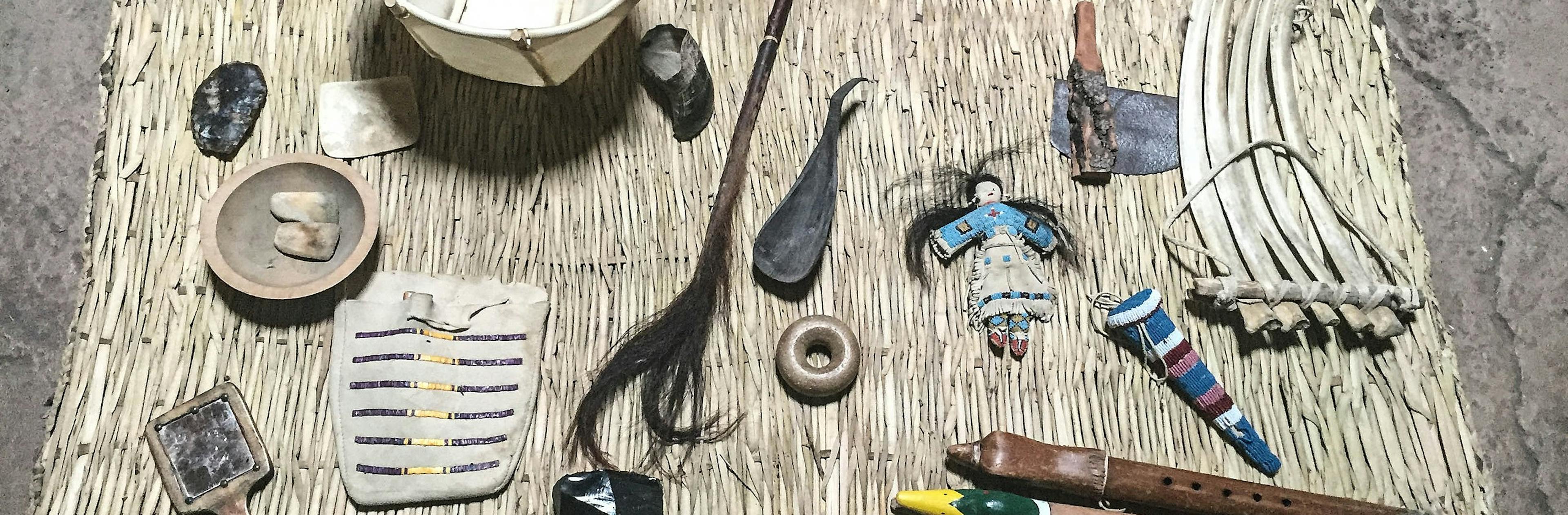
photo: Victoria Stauffenberg/National Park Service
The Knife River Indian Villages National Historic Site preserves the historic and archaeological remnants of bands of Hidatsa, Northern Plains Indians, in North Dakota along the Missouri River. This area was a major trading and agricultural area. At the site, there are the visible remains of earth-lodge dwellings, cache pits, and travois trails. The remains of the earth-lodge dwellings can be seen as large circular depressions in the ground. These dwellings were as large as 40 feet in diameter. The earthlodge, or awadi, was a central part of traditional Hidatsa life. The women of the clan were responsible for its construction, maintenance, and ownership. They gathered the necessary materials during the year, when the snow made it easier to transport heavy loads. An experienced older woman would supervise the construction of the lodge, which usually took place in late summer or early fall. Once completed, the lodge would be occupied by a single family for several years before it was abandoned and a new one built. However, with the arrival of Europeans in North America, their way of life began to change rapidly. The fur trade disrupted traditional patterns of hunting and gathering, and new diseases took a toll on Hidatsa villages. In 1845, most of the Hidatsa people left their homes along Knife River and joined with the Mandan tribe at Fort Berthold reservation. Today, visitors to Knife River can see firsthand the remains of this once-thriving community and imagine what life was like for its residents long ago.